
Lecture Note
The Organized Home and How Shared Digital Notes
-
University
Eastern Kentucky University Course
SOC 245 | Sociology of the FamilyPages
4
Academic year
2026
-
Sarah Jenkin
Views
558
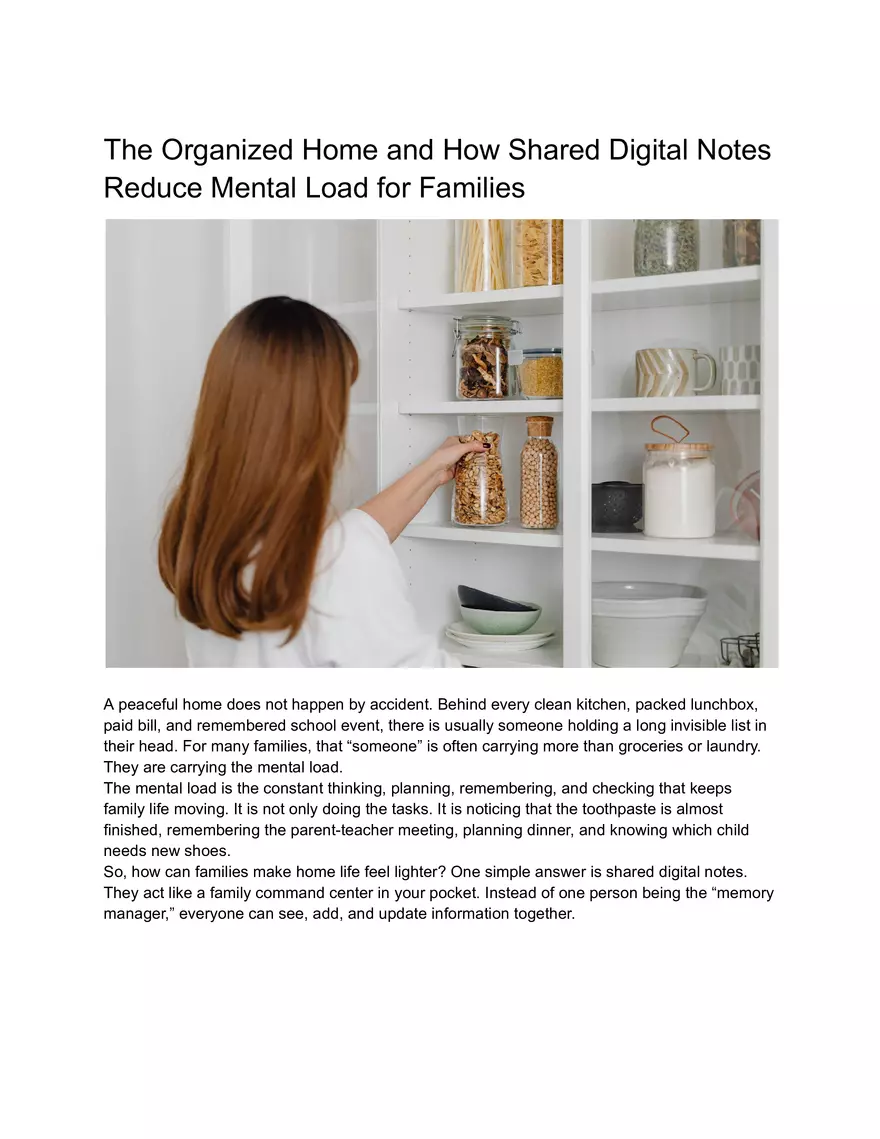
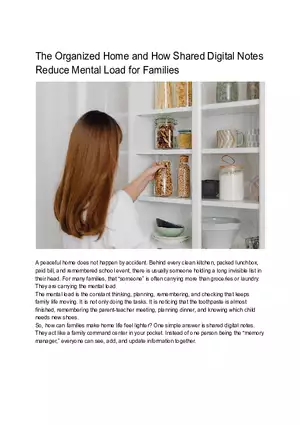
The Organized Home and How Shared Digital Notes Reduce Mental Load for Families A peaceful home does not happen by accident. Behind every clean kitchen, packed lunchbox, paid bill, and remembered school event, there is usually someone holding a long invisible list in their head. For many families, that “someone” is often carrying more than groceries or laundry. They are carrying the mental load. The mental load is the constant thinking, planning, remembering, and checking that keeps family life moving. It is not only doing the tasks. It is noticing that the toothpaste is almost finished, remembering the parent-teacher meeting, planning dinner, and knowing which child needs new shoes. So, how can families make home life feel lighter? One simple answer is shared digital notes. They act like a family command center in your pocket. Instead of one person being the “memory manager,” everyone can see, add, and update information together.
Why an Organized Home Starts With Clear Communication An organized home is not just about labeled boxes and tidy shelves. It begins with communication. When family members do not know what needs to be done, small tasks can quickly turn into stress. Think of the home like a busy train station. If no one knows the schedule, people miss trains, bump into each other, and feel confused. But when the timetable is clear, everyone knows where to go and when to move. The same is true for family life. A shared plan helps reduce repeated questions like “What’s for dinner?” or “Did anyone buy milk?” It also avoids the classic problem of one person knowing everything while others wait for instructions. Digital notes make communication easy because they are simple, flexible, and always available. Families can create notes for groceries, school tasks, cleaning routines, appointments, meal plans, gift ideas, and even vacation packing lists. When everyone uses the same system, the home becomes easier to manage. What Mental Load Looks Like in Daily Family Life Mental load often hides inside ordinary moments. It may not look like work from the outside, but it uses a lot of energy. For example, making dinner is one task. But before dinner appears on the table, someone has to check the fridge, choose a meal, remember food preferences, buy ingredients, plan the cooking time, and make sure there are clean dishes. That is the mental load behind one simple meal. In families, mental load can include remembering birthdays, booking doctor appointments, tracking homework, planning childcare, managing bills, and keeping household supplies stocked. It is like having a browser with 30 tabs open all day. Even when nothing is happening, the mind stays busy. This can lead to stress, tiredness, and arguments. One person may feel unsupported, while others may not even realize how much planning is happening in the background. Shared digital notes help make this invisible work visible. The Problem With “Just Remind Me” Many people say, “Just remind me, and I’ll do it.” While this may sound helpful, it still leaves one person responsible for remembering. That means the mental load has not really been shared. A better approach is to place tasks somewhere everyone can access. Instead of one person reminding others, the shared note becomes the reminder. This small shift can make a big difference. How Shared Digital Notes Help Families Stay Organized Shared digital notes are useful because they create one reliable place for family information. No more paper lists stuck to the fridge, half-finished texts, or forgotten conversations in the car.
A grocery list is one of the easiest ways to start. When someone uses the last egg or sees that cereal is running low, they can add it to the shared list immediately. The next person at the store already has the updated list. Meal planning is another great use. Families can create a weekly dinner note with simple meals for each day. This reduces the daily question of what to cook and helps avoid last-minute takeout. Digital notes also work well for family schedules. A note can include sports practices, school events, appointments, work trips, and weekend plans. While a calendar is great for dates and times, notes are better for extra details, such as what to bring, who is driving, or what forms need to be signed. Cleaning routines can also become easier. A shared checklist can divide jobs by room, person, or day. When tasks are checked off, everyone sees the progress. This helps prevent the feeling that one person is doing everything alone. Simple Ways to Use Shared Notes Without Making Life Complicated The best family organization system is the one people will actually use. It does not need to be fancy. In fact, simpler is usually better. Start with three basic shared notes: groceries, weekly tasks, and family reminders. These cover many common needs without overwhelming anyone. Use clear titles so everyone can find things quickly. For example, “Grocery List,” “This Week,” and “School & Kids” are better than vague names like “Important Stuff.” Keep notes short and easy to scan. Long messy notes can become digital junk drawers. Use checkboxes, short lines, and simple categories. It also helps to agree on basic family habits. For example, everyone adds grocery items when they notice them. Everyone checks the weekly task note once a day. Everyone updates the note after completing a task. Choosing the Right Notes App The best app is the one your family already understands. Apple Notes, Google Keep, Microsoft OneNote, Notion, or any shared note app can work well. The tool matters less than the habit. Look for features like real-time sharing, checklists, easy editing, phone access, and simple organization. Families do not need a perfect system. They need a system that feels natural. Building Teamwork and Reducing Stress at Home Shared digital notes do more than organize tasks. They can change the feeling inside the home. When responsibilities are visible, it becomes easier to share them fairly. This helps reduce resentment. Instead of one person saying, “I have to think of everything,” the family can look at the shared note and decide together. The note becomes a neutral space, not a personal complaint.
Children can also take part. Younger kids can check off simple chores, while teenagers can add school deadlines, sports items, or things they need from the store. This teaches responsibility in a practical way. Shared notes also support better planning. When the family can see what is coming, there are fewer surprises. Mornings become smoother. Shopping becomes faster. Weekends feel less chaotic. Of course, digital notes will not magically solve every family problem. They are not a fairy godmother with Wi-Fi. But they can remove a lot of unnecessary confusion. And when confusion goes down, patience often goes up. A Lighter Home Starts With a Shared System An organized home is not about perfection. It is about creating systems that help people live with less stress and more cooperation. Shared digital notes are a simple but powerful way to reduce the mental load for families because they move information out of one person’s head and into a place everyone can use. When grocery lists, reminders, schedules, and tasks are shared, family life becomes more transparent. Everyone can see what needs attention, and everyone has a chance to help. Over time, this builds trust, teamwork, and a calmer home. In the end, a shared digital note is more than a list. It is a small bridge between busy minds. And for many families, that bridge can make everyday life feel lighter, kinder, and much more organized.
Comments
Related Documents
The Organized Home and How Shared Digital Notes


Please or to post comments