
Lecture Note
Mindful Note-Taking for Tracking Habits, Fitness Goals, and Eco-Friendly Practices
-
University
Arizona State University Course
ABS 370 | EcologyPages
4
Academic year
2026
-
Chloe Bennett
Views
446
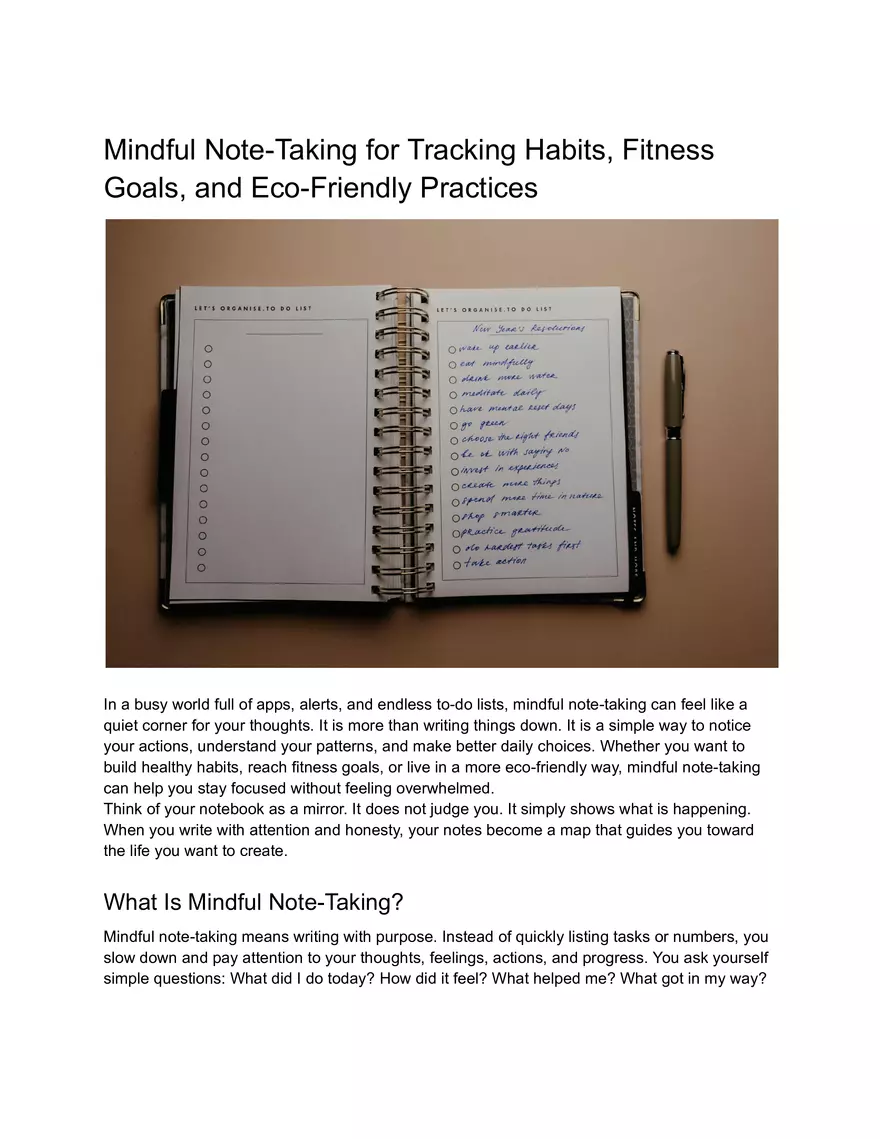
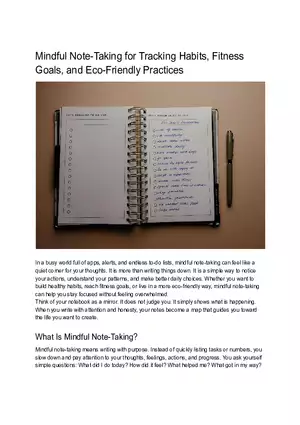
Mindful Note-Taking for Tracking Habits, Fitness Goals, and Eco-Friendly Practices In a busy world full of apps, alerts, and endless to-do lists, mindful note-taking can feel like a quiet corner for your thoughts. It is more than writing things down. It is a simple way to notice your actions, understand your patterns, and make better daily choices. Whether you want to build healthy habits, reach fitness goals, or live in a more eco-friendly way, mindful note-taking can help you stay focused without feeling overwhelmed. Think of your notebook as a mirror. It does not judge you. It simply shows what is happening. When you write with attention and honesty, your notes become a map that guides you toward the life you want to create. What Is Mindful Note-Taking? Mindful note-taking means writing with purpose. Instead of quickly listing tasks or numbers, you slow down and pay attention to your thoughts, feelings, actions, and progress. You ask yourself simple questions: What did I do today? How did it feel? What helped me? What got in my way?
This method works because it connects action with awareness. For example, writing “I walked 20 minutes today” is useful. But writing “I walked 20 minutes today and felt calmer afterward” gives you deeper insight. You are not only tracking behavior; you are learning from it. Mindful note-taking also helps reduce pressure. Many people quit habit trackers because they miss one day and feel like they have failed. But mindful tracking is not about being perfect. It is about noticing, adjusting, and continuing. Progress is not a straight road; it is more like a garden path with turns, stones, and surprises. Using Mindful Notes to Track Daily Habits Habits shape our days more than we often realize. Drinking water, sleeping well, reading, cleaning, meditating, or limiting screen time may seem small, but these actions build the foundation of our lifestyle. Mindful note-taking makes these habits visible. Start by choosing a few habits that truly matter to you. Do not try to track everything at once. If your notebook becomes too crowded, you may stop using it. Instead, focus on three to five habits. For example, you might track water intake, sleep, movement, mood, and screen time. Each day, write a short note about what happened. You can use simple symbols, checkmarks, or short sentences. The key is to include a little reflection. Did the habit feel easy or hard? What made it possible? What distracted you? Simple Habit Questions to Ask Yourself To make habit tracking more mindful, use questions like: What habit supported me today? What habit did I avoid, and why? What small choice can I repeat tomorrow? How did my environment affect my behavior? These questions help you see patterns. Maybe you drink more water when you keep a bottle on your desk. Maybe you sleep better when you stop using your phone earlier. Once you notice these details, change becomes easier and more natural. Tracking Fitness Goals Without Losing Motivation Fitness tracking often focuses on numbers: weight, steps, calories, distance, or workout time. These numbers can be helpful, but they do not tell the whole story. Mindful note-taking adds the missing human part. Instead of only writing “30-minute workout,” add how your body felt. Were you strong, tired, stiff, proud, or stressed? Did the workout improve your mood? Did you enjoy it? This kind of fitness journaling helps you build a healthier relationship with exercise. For example, if you notice that morning workouts make you feel energetic all day, you may decide to exercise earlier. If you notice that intense workouts leave you exhausted, you may add more rest days. Your notes become a personal coach, helping you listen to your body.
What to Include in a Fitness Note A good fitness note does not need to be long. You can record the type of workout, duration, energy level, mood, and recovery. For instance: “Yoga, 25 minutes. Felt tense at first but relaxed after. Back feels better. Need to stretch again tomorrow.” This simple note gives more value than a plain number. It helps you connect fitness goals with well-being. After all, exercise should support your life, not feel like punishment. Also, mindful fitness tracking can protect you from comparison. Social media often makes people feel behind, as if everyone else is running faster, lifting heavier, or looking better. Your notebook brings the focus back to your own journey. Your progress belongs to you. Building Eco-Friendly Practices Through Notes Eco-friendly living can feel huge. Climate issues, plastic waste, energy use, and overconsumption may seem too big for one person. But mindful note-taking helps bring sustainability into daily life. It turns big ideas into small, realistic actions. You can track eco-friendly practices such as using reusable bags, reducing food waste, biking instead of driving, saving water, buying secondhand items, or eating more plant-based meals. These notes remind you that small choices matter. For example, you might write, “Used my reusable cup today. Felt good avoiding plastic.” Or, “Forgot my shopping bag again. Need to keep one near the door.” These notes are not about guilt. They are about awareness. Mindful note-taking can also help you understand your consumption habits. Do you buy things when you are bored? Do you waste food because you do not plan meals? Do you leave lights on when you are distracted? Your notebook can reveal these hidden patterns gently, like a flashlight in a dark room. Over time, these small notes can lead to meaningful lifestyle changes. You may start meal planning, repairing items instead of replacing them, or choosing local products. Sustainable living becomes less like a strict rulebook and more like a thoughtful daily practice. Creating a Mindful Note-Taking Routine That Lasts The best note-taking system is the one you will actually use. It does not need to be beautiful, expensive, or complicated. A plain notebook, a notes app, or a simple spreadsheet can all work. What matters is consistency and honesty. Set aside a few minutes each day, preferably at the same time. Evening works well because you can reflect on the whole day. Morning can also work if you prefer planning ahead. Keep your notes short enough that they feel easy, even on busy days. You can divide your page into three sections: habits, fitness, and eco-friendly choices. Under each section, write one or two lines. Add a mood word or a quick lesson learned. At the end of the week, review your notes. Look for patterns, wins, and areas to improve.
Remember, mindful note-taking is not a test. It is a conversation with yourself. Some days will look messy. Some goals will change. That is normal. Life is not a machine; it is more like weather. Your notes help you understand the forecast and prepare with kindness. A helpful weekly review might include three simple sentences: This week, I noticed… I am proud that… Next week, I will try… These reflections keep you moving forward without harsh self-criticism. They also make your progress easier to see. Sometimes growth is quiet, and writing it down helps you recognize it. Conclusion Mindful note-taking is a powerful yet simple tool for tracking habits, fitness goals, and eco-friendly practices. It helps you slow down, notice your choices, and understand what supports your well-being. Instead of chasing perfection, you learn to build awareness, one note at a time. By writing honestly about your daily habits, body, mood, and sustainable actions, you create a clear path toward better living. Small notes can lead to big changes, just as tiny seeds can grow into strong trees. Start today with one sentence, one habit, or one eco-friendly choice. Your future self may thank you for paying attention.
Comments
Mindful Note-Taking for Tracking Habits, Fitness Goals, and Eco-Friendly Practices


Please or to post comments